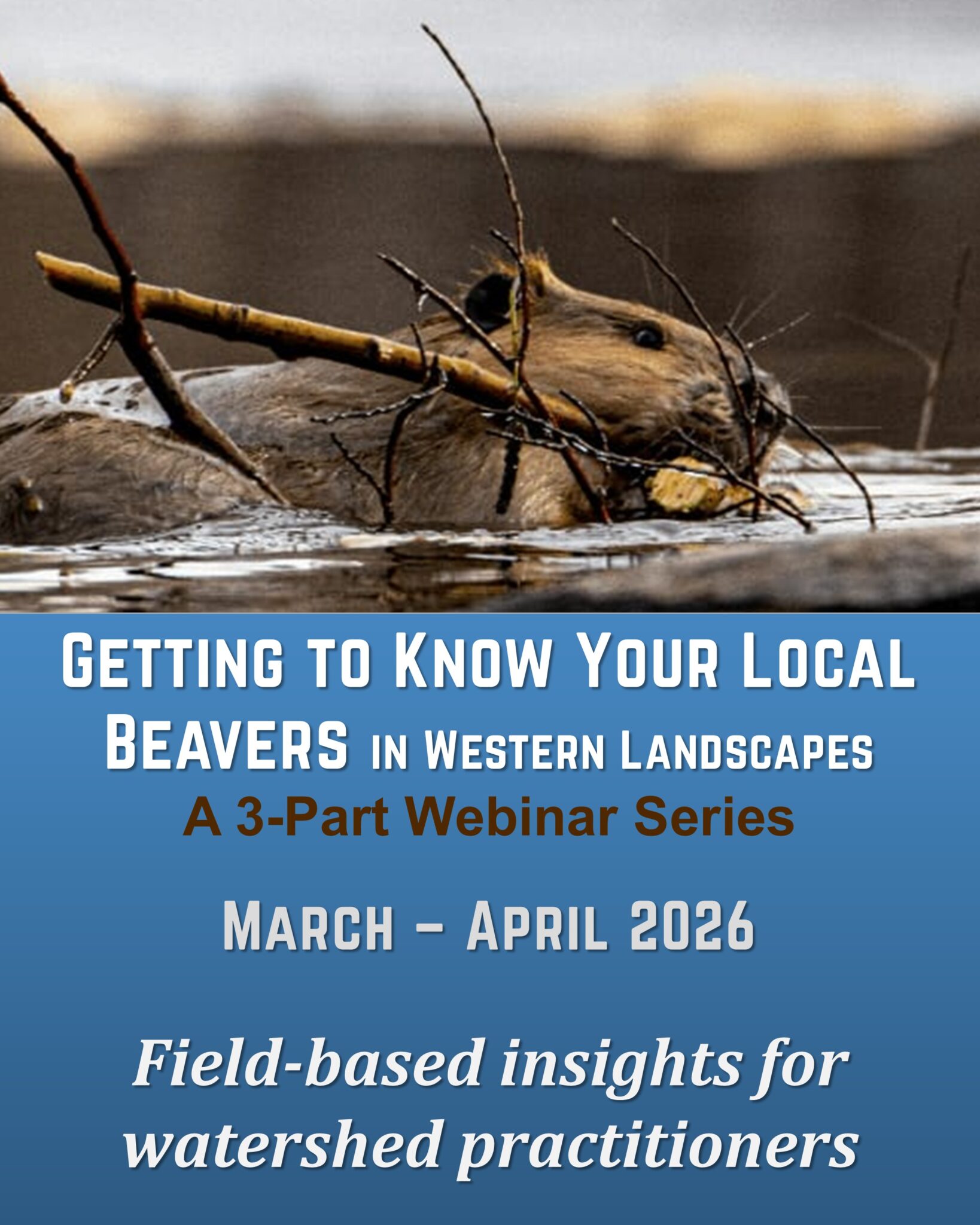
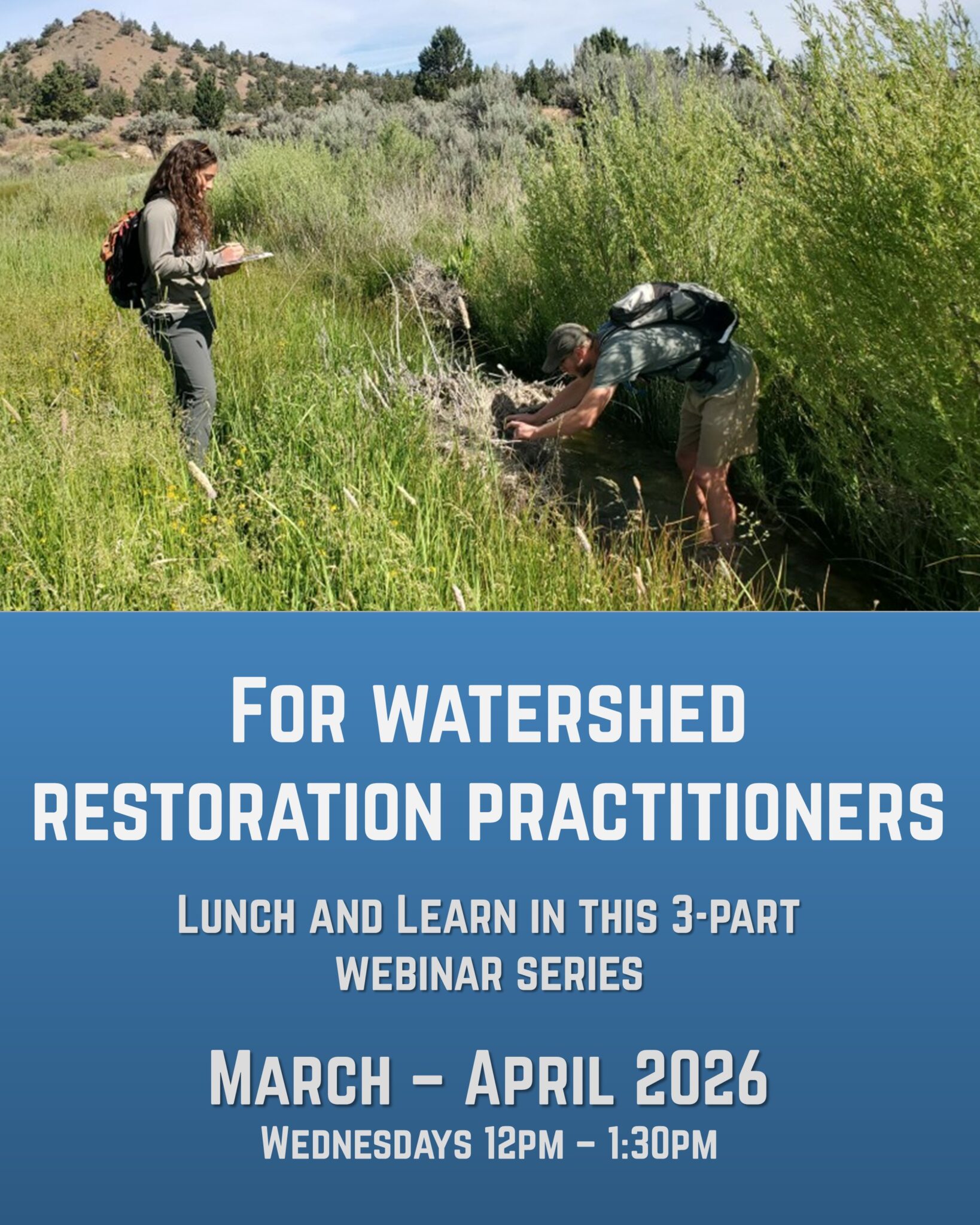
A three-part webinar series for restoration practitioners working in western, high-desert landscapes. The series offers field-tested guidance on beaver biology, assessing beaver activity, and using that information to support beaver occupancy and beaver-based restoration at scale. Learn directly from experienced field practitioners and beaver ecologists monitoring beavers across the West.
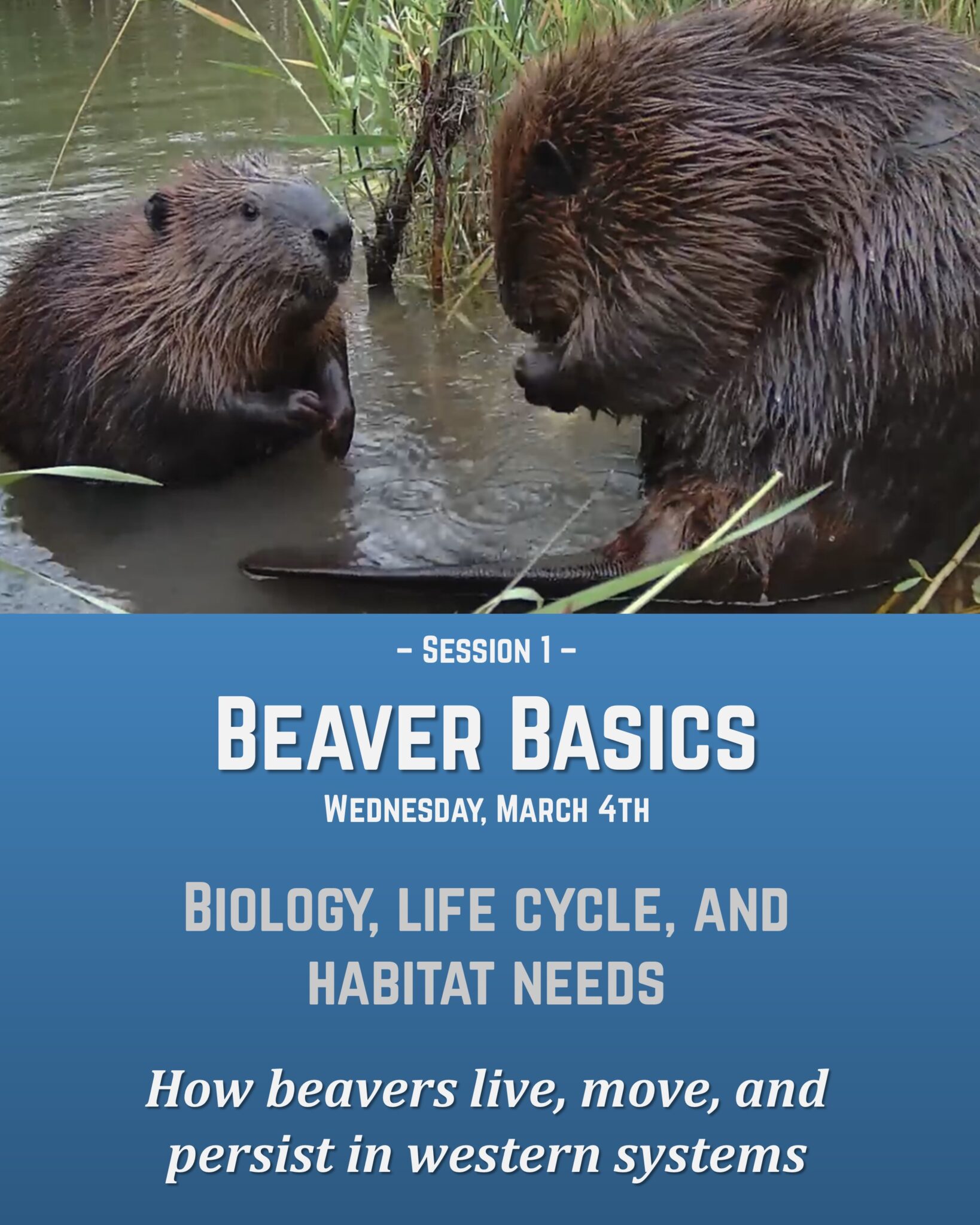
Session 1 - Beaver Basics: Biology, Life Cycle, and Habitat Needs
An applied introduction to beaver ecology focused on western landscapes. This session covers beaver life cycles, seasonal behavior, dispersal, forage needs, and what beavers need to persist across variable flow regimes and working lands. Guest presenter: Dr. Jordan Kennedy, The Beaver Institute
> Watch Recording
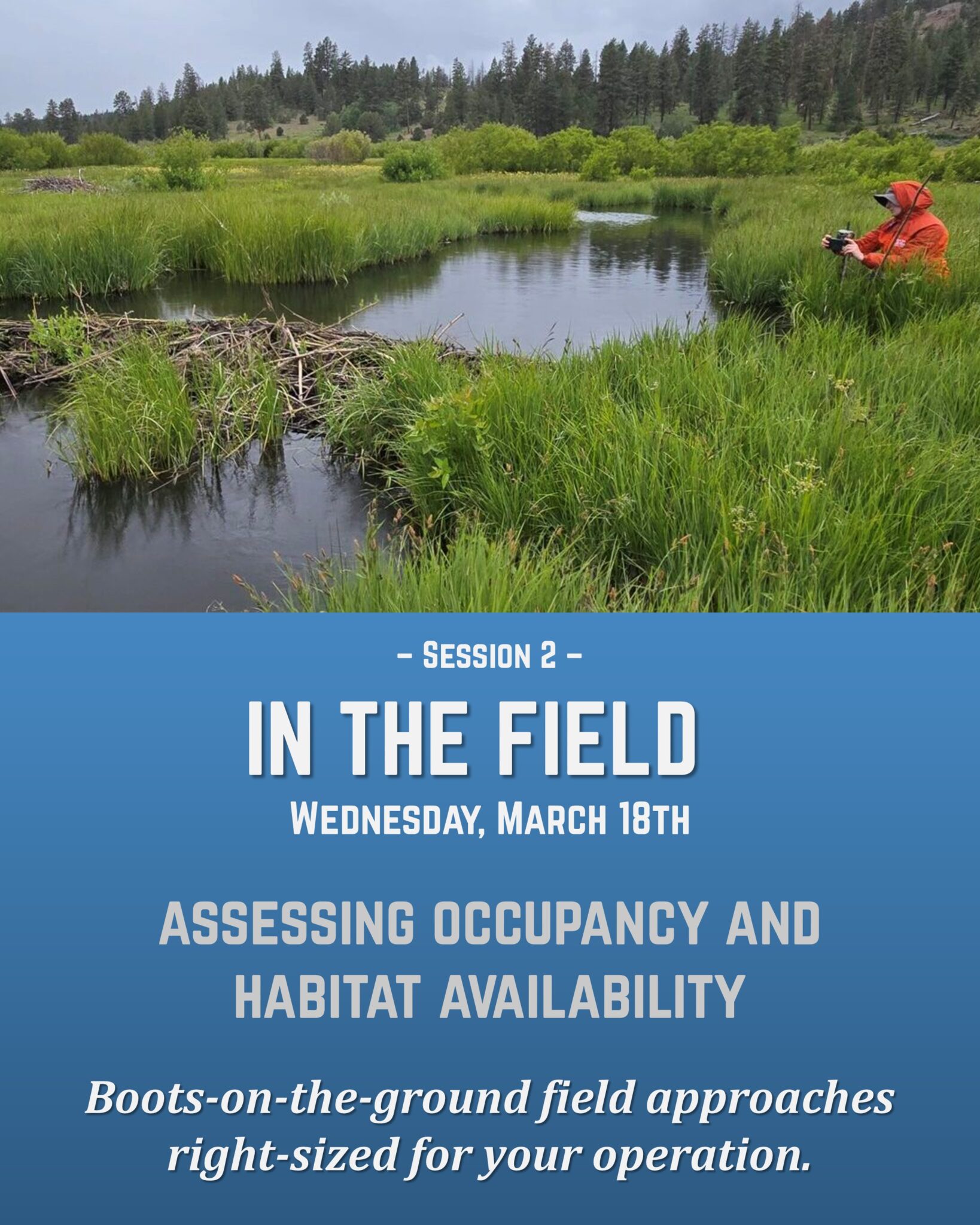
Session 2 - Assessing Beaver Occupancy and Habitat – Boots on Ground
Learn practical, noninvasive approaches to assessing beaver activity using standardized field observations and trail cameras. This session emphasizes choosing the right tools and assessment intensity based on your organization’s capacity, staffing, and budget.
Guest presenters: Alex Fortin, Natalie D’Souza - Beaver Ecology & Relocation Collaborative
> Watch Recording
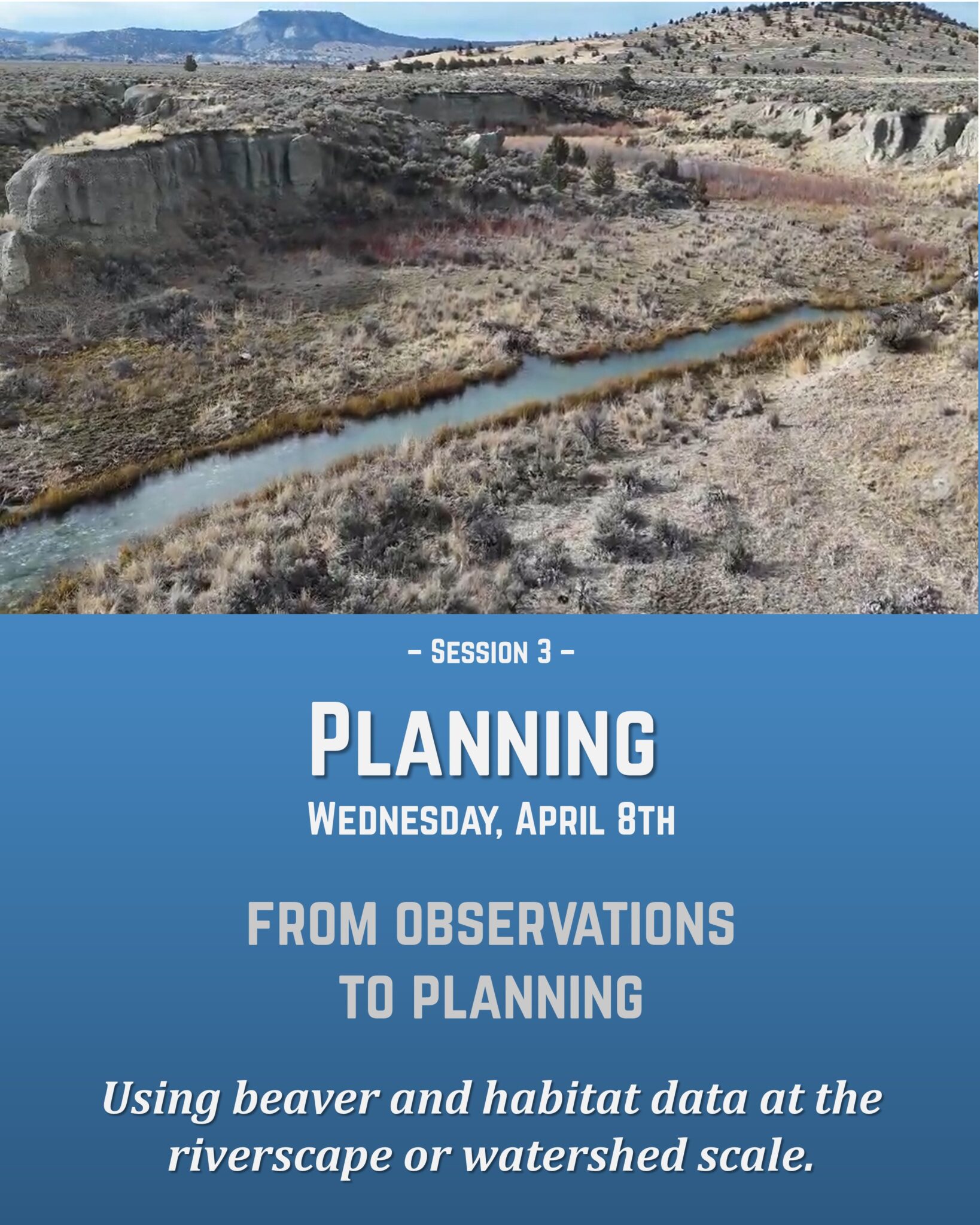
Session 3 - Understanding the Data: From Site Observations to Riverscape Planning
Move from individual observations to riverscape and watershed-scale insights. This session focuses on interpreting occupancy data to identify where beaver presence is most likely to persist and where landscape investments can realistically support long-term success.
Guest presenters: Herb Winters, Roger Lathrop – Gilliam SWCD
> Watch Recording
WORKSHOP RESOURCES
- Beaver Strongholds Protocol
- ODFW's Beaver Habitat Management Guidance Booklet - Coming Soon
- Plant communities NRCS Table of Field Guide to Common Riparian Plants
Filter for common native species by ideal growing conditions, species, and more
- PlanControlling Reed Canary Grass, by Kee Dae Kim
- Cluster Plantings by Chris Hoag, NRCS
- Planting Cottonwood on harsh environments by John Bair for RRNW
Day 3
- Storymap > Restoration in the Lower John Day Canyons
Past, Present, and Future Efforts to Revitalize Aquatic Habitat in Oregon's Thirtymile Creek Watershed - Kent Smith
- Hay Creek Drone Footage
RELATED READING
- Reconstructing Historical Riparian Conditions of Two River Basins in Eastern Oregon, USA, 2007, Lynne S. McAllister
- Reports on Riparian Vegetation for Beaver Establishment Success
Determining how much forage to use in your stream recovery project when persistent beaver managed floodplains is a goal
VIDEOS
Want to further your Willow knowledge? We've been watching these helpful videos
| Length | Title (Click to play) | Presenter |
| 18 minutes | Key Features for Identifying Willows | Robert Dorn |
| 75 minutes | Salix (Willow) Identification | Dr. Tom Rosburg |
| 60 min, best stuff starts minute 35 | Introduction to Plant Terminology: The Secret to Identification | Dr. Cynthia Lane |
| 17 min | Rooting "HUGE" Willow Cuttings! One of the Easiest "Houseplants" You Can Propagate from Cuttings | |
| 18 min | Semi-Cultivating Wild Willow- Coppices and Pollards and Beavers. Oh My! | Oxbow Farm |
JOIN US THIS FALL 2024
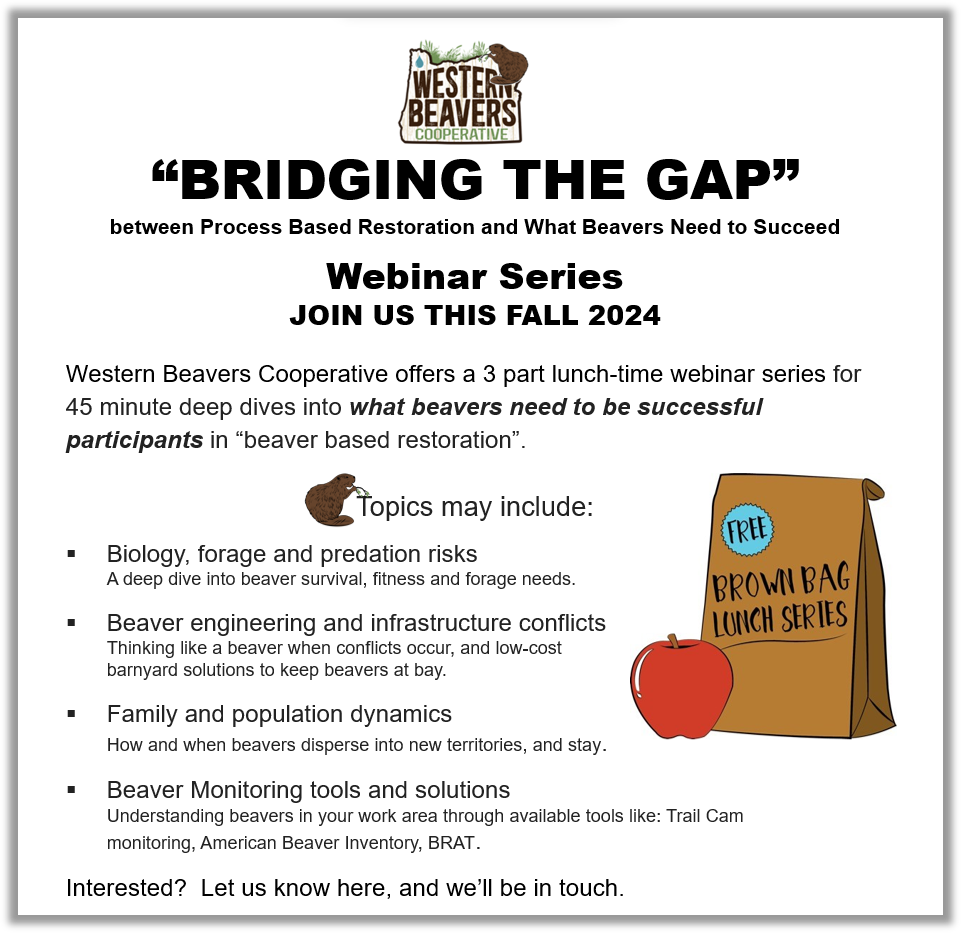
BROWN BAG LUNCH TIME WEBINARS
Drop us a note if you'd like to be notified: info@westernbeavers.org.