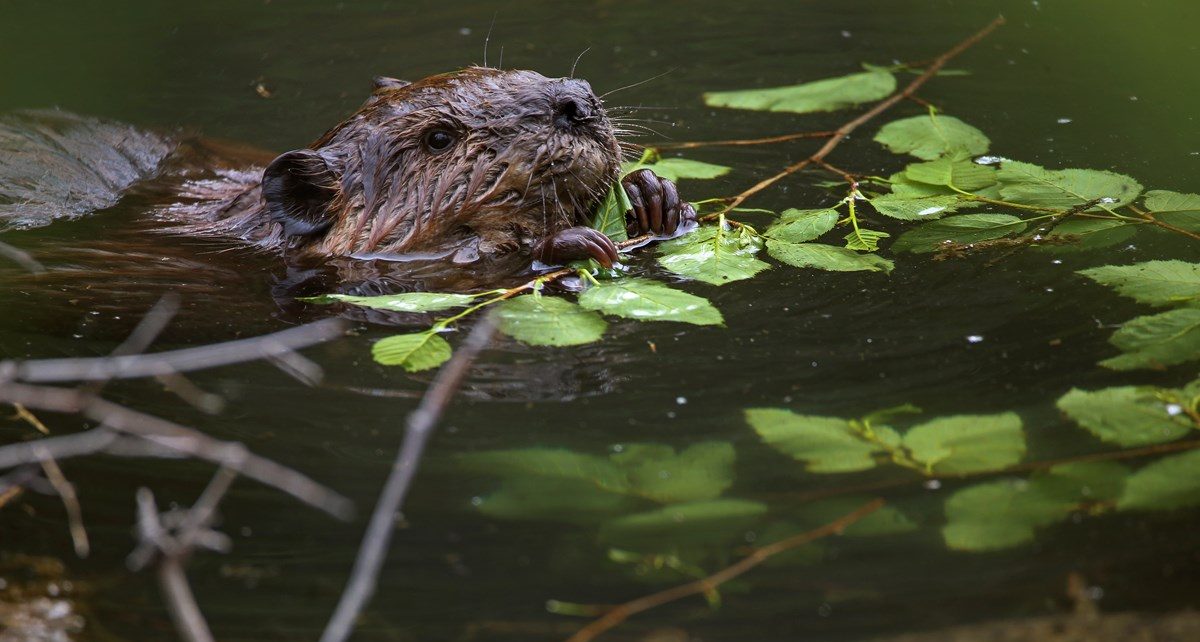
Natural Beaver Recolonization
A Practical Path Toward Landscape-Scale Recovery
Across much of the western United States, interest in beavers has grown rapidly over the past decade. This attention is not only about the dams beavers build, but about the landscapes those dams historically created. Prior to widespread trapping in the nineteenth century, many valley bottoms across the West functioned as complex wetland and riparian systems shaped by generations of beaver activity. Over roughly two centuries of reduced beaver presence, many of these systems simplified. Channels incised, floodplains disconnected, and riparian vegetation declined.
Today, restoration practitioners are increasingly recognizing that many of the hydrologic and ecological functions now being sought through restoration work were once maintained continuously by resident beaver populations. This realization has renewed interest in how working beavers might again help rebuild these valley bottom systems.
Yet an important observation emerges when one spends time closely watching these watersheds. In many places, beavers are not entirely absent. Small resident family groups persist in scattered pockets, and dispersing animals continue to move through tributaries each year. What often appears to be a landscape without beavers is more accurately a landscape where beavers move through but cannot consistently settle.
Across many western watersheds, beavers are not completely gone. They are moving through the landscape every year. What is often missing is not dispersing animals, but places capable of holding them.
If we actually look closely in our own watersheds, this pattern becomes visible. Trail cameras, fresh chew marks, temporary dams, and short-lived lodges often reveal dispersing animals testing sites across the landscape. Many of these locations are occupied briefly and then abandoned. After years of monitoring streams across Eastern Oregon, this pattern appears again and again: beavers arrive, explore a reach, sometimes build briefly, and then move on.
In many cases the same reach may be visited repeatedly across several years before conditions finally allow settlement.
The animals are present. What determines whether they stay is whether the place can meet the biological thresholds required for persistence.
The resident families that remain scattered across these systems represent something important. They carry generational memory of how to live in these watersheds. Territory knowledge, dam placement, seasonal movement patterns, and winter survival strategies are not invented from scratch by each animal. They are refined across generations occupying the same places.
The locations where beavers persist often reveal subtle conditions that still support long-term occupancy: sufficient woody forage, stable water through late summer, winter refuge, and tolerance from surrounding landowners. These resident territories function as living anchors within the system. They represent places where the ecological thresholds required for persistence are still being met.
Understanding recolonization therefore begins with the beavers themselves.
Young beavers typically disperse as two-year-olds, leaving their natal territories in spring. Most dispersal movements are relatively short. Studies consistently show that many animals settle within a few kilometers of their birthplace if suitable habitat is available. Only a smaller portion travel longer distances.
For a dispersing animal, settlement depends on several basic conditions. There must be sufficient woody forage to sustain multiple seasons of feeding. Water depth must remain adequate through late summer and winter. The channel must allow dams or lodges to function without constant washout. And perhaps most importantly, the reach must lie within a connected network of other occupied territories so that dispersal pathways remain intact.
When those conditions align, settlement can occur surprisingly quickly. A single pair may establish a territory, raise young within a year, and begin exporting dispersers into adjacent reaches within a few seasons. Over time, these family groups begin forming networks across the watershed. Colonies expand outward, filling nearby gaps where conditions allow.
When those conditions are absent, however, dispersal becomes risky. Young animals continue moving through the watershed, but many fail to establish territories. Some attempt to build temporary dams before moving on. Others settle briefly before abandoning the site. Mortality during dispersal can also be high.
What appears from a distance as a lack of beavers is often a pattern of repeated settlement attempts that do not hold.
Recognizing this pattern changes how restoration work can proceed. Instead of focusing primarily on moving animals into new locations, restoration can focus on preparing landscapes to receive the animals that are already dispersing through them.
What This Looks Like on the Ground
In practice, recolonization often unfolds in ways that are easy to miss unless a watershed is observed over several years.
A reach may show occasional chew marks one year, followed by a short-lived dam the next. A pair may attempt to settle briefly before disappearing. For a time the site may appear quiet again.
Then conditions change.
Vegetation thickens along the banks. A wetter year raises summer water levels. Grazing pressure shifts. A temporary structure stabilizes a channel section. Suddenly a pair holds through the summer, survives the winter, and produces kits the following spring.
Once that first territory stabilizes, the dynamics of the system begin to shift. Young from that family disperse into nearby reaches. Some will fail, but others may establish new territories nearby. Gradually a pattern begins to emerge: isolated attempts give way to a small network of family groups.
This is how recolonization begins to compound.
Working With Natural Recolonization
Natural recolonization can be understood across several planning horizons.
Over roughly five years, the goal is to prepare priority reaches so that dispersing animals have viable settlement options. This may involve restoring woody forage, rebuilding channel complexity, reducing grazing pressure in key riparian areas, or installing temporary structural support that stabilizes the channel long enough for beavers to begin engineering.
At this stage the objective is not immediate widespread occupancy. Rather, it is to position the landscape so that when dispersers arrive, they encounter reaches capable of supporting early settlement. Even modest improvements in habitat readiness can make an enormous difference. A reach that once rejected dispersers may begin to support a first territory.
Over roughly ten years, the focus shifts toward consolidation. Once several family groups become established, the work begins reinforcing the network connecting them. Additional reaches can transition from marginal habitat into functioning territories as vegetation responds to increasing hydrologic retainage and sediment deposition created by beaver engineering.
During this period the landscape begins to change more visibly. Dam complexes expand, floodplains reconnect, and woody vegetation recruitment accelerates. Importantly, dispersers produced by resident family groups now begin supplying the watershed internally.
Over a twenty-year horizon, a different pattern begins to emerge. Instead of isolated colonies, the watershed begins to contain distributed strongholds. These are reaches capable of sustaining multi-generational occupancy, consistently producing dispersers, and exporting animals into adjacent tributaries.
At that point recolonization becomes self-reinforcing. Beaver engineering improves hydrologic conditions and vegetation recruitment, which in turn increases the habitat capacity for additional family groups. The watershed gradually shifts toward a functioning network of territories rather than scattered temporary occupancy.
This process unfolds on generational timescales rather than project timelines. Beaver populations expand through lineage persistence, not through isolated restoration actions. Each successful territory becomes a source for future dispersers, and each disperser represents the possibility of another territory emerging somewhere nearby.
From a restoration perspective, the practical implication is clear. The most reliable way to accelerate beaver recovery across a watershed is to focus first on the places where settlement is already biologically plausible.
Supporting those early territories creates the foundation from which broader recolonization can occur.
Over time those territories begin exporting animals into surrounding reaches. Some dispersers will fail. Others will settle. A few will establish the next generation of family groups. Gradually the network expands.
Seen from this perspective, natural recolonization is not passive. It is an active form of restoration grounded in the ecology of the animal itself.
The work involves preparing landscapes so that when dispersing beavers arrive — as they already do — they encounter places capable of holding them.
Small improvements in habitat readiness can change the trajectory of an entire watershed. A reach that once rejected dispersers may begin to support settlement. A single successful territory may begin exporting animals into surrounding reaches.
Over time those territories connect, and those networks begin rebuilding the beaver-shaped landscapes that once defined many western valley bottoms.
Recovery does not begin with moving animals around the map.
It begins by rebuilding the kinds of places where beavers can live.
And when those places return, the beavers tend to find them.
Natural Beaver Recolonization — In Brief
Beaver recovery across a watershed does not begin with moving animals around the landscape. It begins with rebuilding places where beavers can live.
Three patterns appear again and again in working watersheds:
1. Dispersing beavers are usually already present.
Young animals move through tributaries every year searching for places to settle.
2. Settlement depends on habitat readiness.
Beavers stay where forage, water, channel stability, and tolerance allow long-term survival.
3. A few successful territories can rebuild an entire watershed.
Once a family group stabilizes, it begins producing dispersers that establish new territories nearby.
Because of this, restoration work can focus on preparing key reaches to receive dispersing beavers. Small improvements in habitat readiness can allow settlement where animals previously passed through.
Over time, these territories connect into networks that rebuild the wetland and riparian systems beavers historically maintained across western valley bottoms.