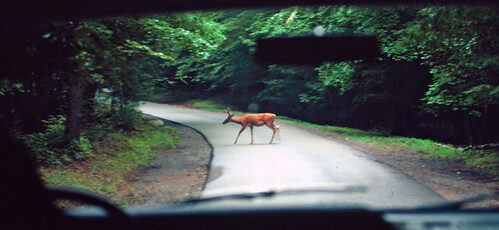
Western Beavers encourages project participants, volunteers, contractors, and partners to plan travel with wildlife movement in mind. Many of our project sites are reached by rural roads, gravel roads, and highway corridors where wildlife crossings are common. Mule deer, elk, coyotes, foxes, beavers, and other wildlife are often most active near dawn and dusk, when visibility is lower and drivers have less time to react.
Recommended Travel Buffer
When possible, avoid driving to or from project sites during the following periods:
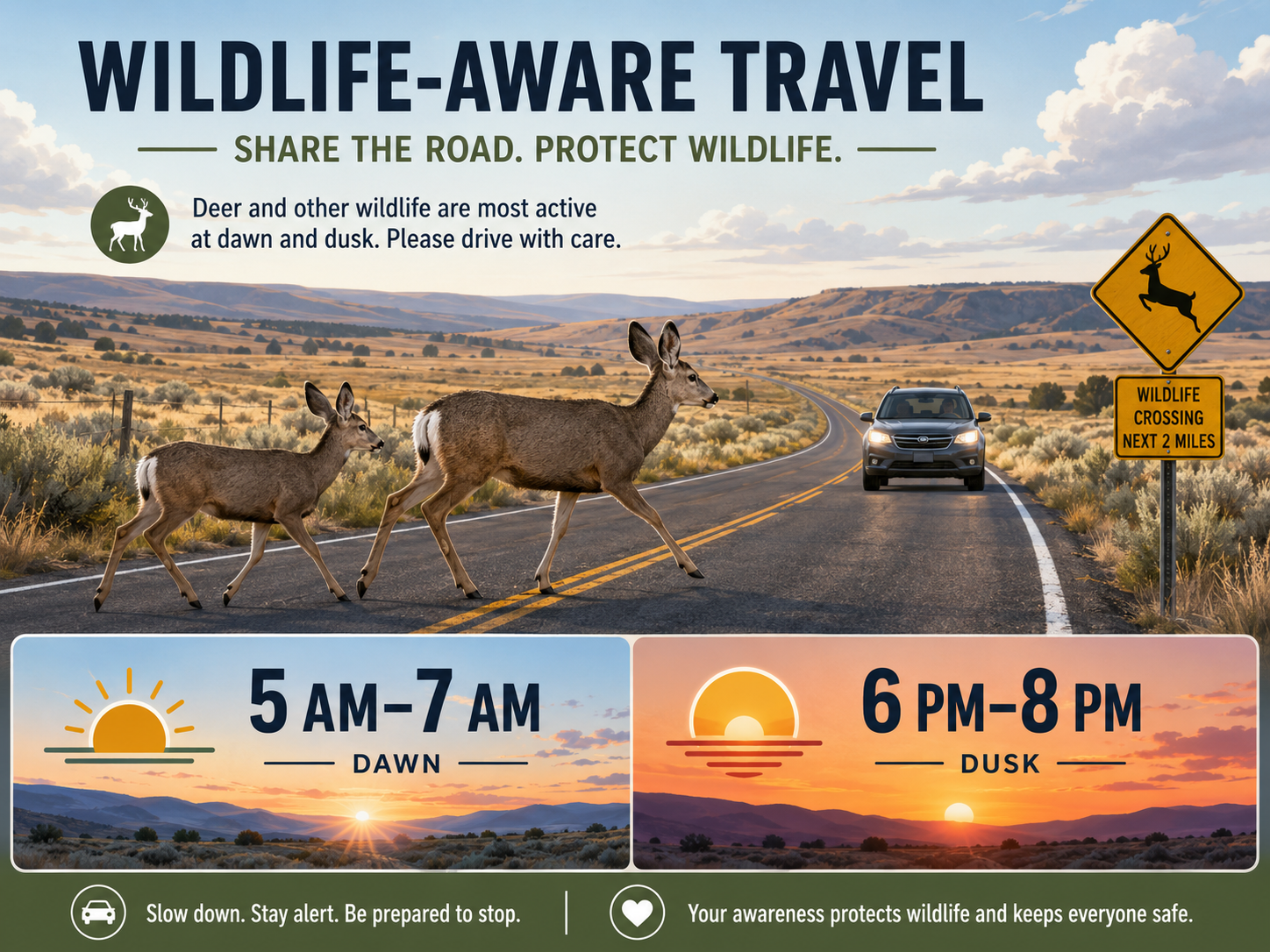
- Morning: one hour before sunrise through one hour after sunrise (approx. 5am to 7am)
- Evening: one hour before sunset through one hour after sunset (approx. 6pm to 8pm)
If helpful, here's where you can check times for the nearest project area: https://www.timeanddate.com/astronomy/usa/oregon
Why Dawn and Dusk?
Dawn and dusk are active movement periods for many wildlife species. These twilight hours often line up with travel between bedding areas, feeding areas, water sources, cover, and movement corridors.
Wildlife may be especially active during these periods because:
- Many animals avoid the heat and exposure of midday.
- Low light provides cover while animals move, feed, or return to bedding areas.
- Food and water use often increase in the early morning and late evening.
- Rural roads often cross the same valleys, draws, riparian areas, and travel routes that animals use.
A Simple Field Rule
Before heading out, check sunrise and sunset for the nearest project location. Then build in a travel buffer so you are not driving during the one-hour period before and after sunrise or sunset, when possible.
This is not always practical. Some field days start early, run long, or involve remote access. But when schedules can be adjusted, shifting travel outside these periods is a simple way to reduce risk for people and wildlife.
Please reach out to us at info@westernbeavers.org if adjusting your travel time creates an unexpected need for overnight accommodations.
Travel Carefully When Avoidance Is Not Possible
If travel during dawn or dusk cannot be avoided:
- Slow down, especially near riparian areas, curves, draws, and field edges.
- Watch for more than one animal. Deer and elk often move in groups.
- Use high beams when appropriate and safe for oncoming traffic.
- Give yourself extra time so you are not rushed.
- Stay especially alert on quiet rural roads where wildlife may not move away quickly.
Our goal is simple: get people to and from project sites safely while respecting the animals already moving across these landscapes.